
Designing for Dignity: How Intentional Architecture Closes the Healthcare Equity Gap
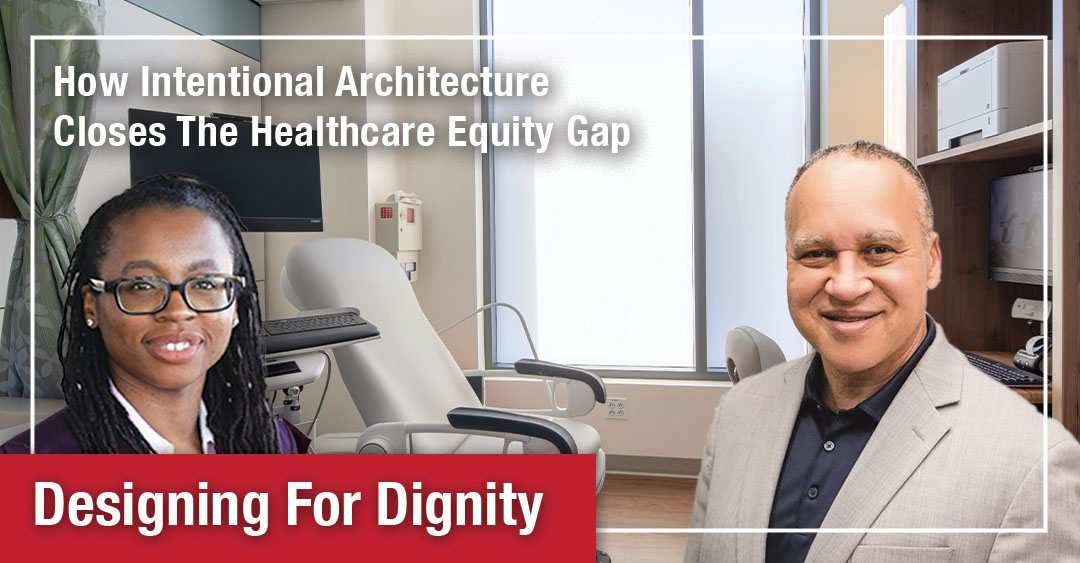
In a featured article with Healthcare Business Today, DIG’s Vincent Myers and LoriAnne Jones gave transparency to the complex, and often exclusionary, practices in American healthcare design. Myers and Jones draw a parallel between mortality rates in underserved communities, comprised predominately of people-of-color, and healthcare institutions that are unresponsive to the community needs. Elements of inclusionary design are broken-down as a strategy as opposed to an aesthetic approach. Closing healthcare equity gaps, they state, requires a multidisciplinary relationship between architecture, interior design, environmental graphics, and wayfinding, to center both the cultural and physical well-being of the patients in the design execution.
From Strategy to Sovereignty: The FQHC Revolution
FQHCs are the backbone of health equity, yet they often face the steepest challenges in terms of funding and infrastructure. It is DIG’s philosophy that “budget-conscious” should never mean quality- or dignity-deficient. The firm’s community health center projects serve as a tangible manifestation of this vision, ranging from ground-up new developments to gut renovations with targeted aesthetic and functional updates.
To read the full article, visit:
https://www.healthcarebusinesstoday.com/healthcare-design-advancing-equity/